
To Be Frank eBook : Hawley, Philippa: Amazon.co.uk: Kindle Store
— Read on www.amazon.co.uk/Be-Frank-Philippa-Hawley-ebook/dp/B09XF839JD/ref=mp_s_a_1_2
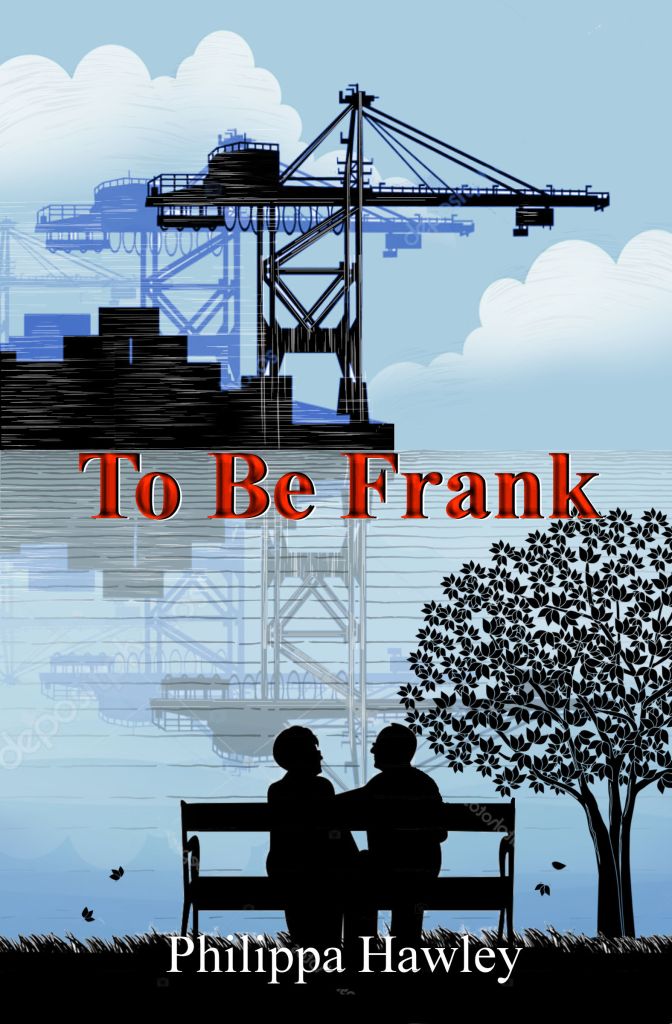
Will fate give Frank a chance?

To Be Frank eBook : Hawley, Philippa: Amazon.co.uk: Kindle Store
— Read on www.amazon.co.uk/Be-Frank-Philippa-Hawley-ebook/dp/B09XF839JD/ref=mp_s_a_1_2
Will fate give Frank a chance?

This time last year To Be Frank secured a publishing contract with Blossom Spring Publishing and since then it’s been quite a year. The book was launched in April 2022 at a wonderful event supported by Wivenhoe Bookshop and since then Frank’s story has been enjoyed by many. I hope even more readers will appreciate it in 2023. Meanwhile I send Christmas greetings to all involved, readers, family and friends, in the hope the world can start to rediscover some balance and peace for the future.
https://www.fd81.net/philippa-hawley-2022-1-f.html
Travel story, two guys exploring the West Coast of America, each with their own reasons. This is soon to be published in a fiction anthology but is already out there on http://www.fd81.net
My novel To Be Frank, is going through the editing process with my publisher’s team; essential to releasing a book. I love writing and enjoy the editing of content and organisation, but I do find the detailed grammar and presentation aspects challenging. Having no qualifications in English Language or Literature, since O levels in 1970, it’s easy to feel inadequate. My medical degrees, scientific background and years of writing healthcare notes don’t seem to help.
I’ve always read a lot but am a relatively slow reader, over-using the technique of sub-vocalisation I suspect, which commonly achieves about 250 words per minute. Visual reading, at approximately 700 words per minute, is at the other extreme. Apparently, proficient readers are able to read at 280-350 words per minute without compromising comprehension. When editing one surely has to slow read and going through an 88,000 manuscript takes time.
During my research into ways of reading, I went off piste and, leaving the editing process behind, I discovered so many styles of reading I’d never thought about in specific terms. Here are just a few snippets:
The concept of ‘speed reading’ began in the late 1950s and can involve skimming and searching sentences for clues, or scanning where one looks for information in a sentence with the use of a mind map to organise it in a visually hierarchical manner. Meta-guiding is another technique, involving the visual guiding of the eye using a finger or a pointer.
The other end of the spectrum is ‘slow reading’, which is the intentional reduction in the speed of reading to increase comprehension and pleasure. It originated in the study of philosophy and literature and there’s been an increase in interest in slow reading as a result of the ‘slow movement’ and its focus on a deceleration of the pace of modern life. (Close reading or deep reading is the use of slow reading in literary criticism). Sven Birkerts, an American essayist and literary critic, says in The Gutenberg Elegies (1994) that “Reading, because we control it, is adaptable to our needs and rhythms”.
Typoglycemia, incidentally, is the ability to read jumbled words. It is thought that to see the first and last letters of a word, in the right place, is all that matters and that’s why we can so often solve the puzzles posted on social media, for example ‘I bte yuo cn rd ths sntnc’ or ‘do oyu fnid this smilpe to raed?’ Maybe that’s also why we can’t always see our own mistakes?
So, I’m voting for slow reading when I next read a novel, with a bit of skimming and a dose of typoglycemia, and meanwhile I give thanks to my editors for helping with the hard grind and time consuming work of copy-editing and proofreading.

FRANK has continued to present his well honed case to agents and potential publishers throughout the month of October but the huge and interesting changes he makes in his fictional life, in the novel, ‘To Be Frank’, have not yet been taken on board. Frank is however not a quitter and in the autumn of his life (he is 62 in the book) he will keep on trying to get recognition. He is aware that many members of the book community are busy catching up post pandemic as well as possibly being involved with the Frankfurt Book Fair so it’s lucky he is a patient character.
Meanwhile as Frank’s creator I’ve been occupying the writer in me by writing short stories and shorter pieces of flash fiction. Suddenly it’s November and notices about NaNoWriMo are appearing across social media platforms. Having completed NaNoWriMo successfully on two past occasions, I chose not to do it again this year and instead I’ve joined FlashNano 2021 which is run by http://www.nancystohlman.com . Here one is sent a daily prompt for the 30 days of November. You can write as little or as much as you wish each day but must write something every day. There is no obligation to post the flashes so it feels more fun and less pressurised than the challenge of the full NaNoWriMo.
I’ve done the first 5 days and am enjoying writing about topics far removed from my usual themes and I guess that’s the idea. Hopefully by the end of the month I’ll have 30 short stories to tidy up and use in the future. Maybe at least one of them might make it’s way into a future novel.
Explore. Create. Share.
Visual Artist
Ruby’s 2022 cruising season
Writing Prizes | Critique Service | Indie Press | Productions | Est. 2012
Searching for and writing about life on the bright side of the road
Actor | voice over & narration | Writer
Carol Cooper - trained to observe, born to write.
Sailing from SE Denmark to Holland and maybe the UK. The easy way!
The parish church for Wivenhoe and the University of Essex
Taking you there and quack again
Words, writing, books and pictures
Author website for Samantha Dodd creator of the Never Forget fiction novel
Writer, editor, educator, and creative.
Winner, Fish Short Fiction Prize 2018 * Nominations: Best Microfictions 2019, Pushcart Prize 2021
Words, writing, books and pictures
Creative Writing Courses and Publishing
WordPress.com is the best place for your personal blog or business site.
 philippahawleywriter